

70% of women with this hip condition have problems with sex, and almost none of them are ever told why. I found out at 2am, from a research paper.
I've been with my husband Thomas for 23 years now, and it breaks my heart to even write this, but we just aren't what we used to be.
And how can we be? I haven't touched him in a year and a half.
But what can I do. I'm too embarrassed to suggest we do something, because halfway through we'll just stop because of my hip. Imagine that. I'm embarrassed to make a move on my own husband, the man I've laid with for 23 years!
I don't know exactly how long this has been going on, but it's been long enough to make everything awkward. I mean it's literally turned my marriage into a friendship.
The worst part is, I can tell he's just accepted it. He doesn't wanna make me feel bad because it's not something that's my fault, but no matter what I've tried nothing's worked, so he just stays quiet.
And that's been our marriage. Just keeping our mouths shut while our romance quickly dies out.
However bad it sounds on here, I promise you, you can't imagine the half of it. Well, actually, if you're reading this maybe you can.
I can't explain to you how many times I went online searching for videos, tutorials, gadgets, anything to help with the pain. The closest I ever got was taking a cortisone shot, which wore off after a few weeks, and that was worse than everything else. Because at least the others didn't give me false hope.
It was one of the worst periods of my life. I could even tell my husband was so much happier during those weeks, and then it just died out again, and I didn't know what to do.
I consulted with every doctor I could find and they all just gave me some BS like it being my age, or some sort of arthritis. To be honest I don't even remember, I couldn't think properly that day.
The Night I Finally Got An Answer
I didn't know what else I could do, I was out of ideas. But I decided I'd throw in a last ditch effort and look online one more time, at about two in the morning, and this time I was gonna check Reddit, Quora, Wikipedia, anything I could find.
All I found was more misinformation, until I came across this one clinical research paper about a condition called gluteal tendinopathy.
When I started reading it, I just couldn't stop. It broke down all the symptoms, the causes, and the misconceptions women my age get told, and I couldn't believe how much I didn't know.
Why I can't sleep on that side anymore. Why getting up off the sofa hurts more than the walk after it. And craziest of all, why the positions that hurt weren't random at all.
I'm not going to pretend I understood all of it that night. But I understood enough to know two things. It had a name. And it wasn't me.
I was so angry that I was only just finding this. I could have prevented two years of watching my marriage fall away.
But what's done is done, and I don't want a single woman to go through what I went through. So I'm going to give you the truth, the science, and the actual evidence, because I am so tired of the fake claims you find online.
What Is Actually Wrong With Your Hip
Put your hand on the outside of your hip and press until you find the hard bony bit. Not the one at the front. The one on the side, the one you feel when you lie on it.
Two muscles from your backside attach right there. Not the big one you sit on, two smaller ones hiding underneath it. Their whole job is to hold your pelvis level every time you stand on one leg.
Which sounds like nothing. Until you count how many times a day you stand on one leg. Every single step. Every stair. Every time you get out of the car.
Every doctor told me it was inflamed. Every name I got ended in itis.
It isn't inflamed. It's worn.
Think of a rope. Fibers packed tight, all running the same way. Mine wasn't torn and nothing had snapped. The fibers had just thinned out and lost their order where they meet the bone. The rope still held. It just held less than it used to.
And that tendon only ever has two things happen to it.
It gets squashed. That's when it gets pressed sideways into the bone underneath it, and it happens any time your thigh comes in toward the middle of your body. Crossing your legs does it. Lying on that side does it. Standing with your weight dropped into one hip does it.
Or it gets worked. That's the tendon pulling along its own length while the muscle does its job. That's what it's for, and it's the only thing that makes it stronger.
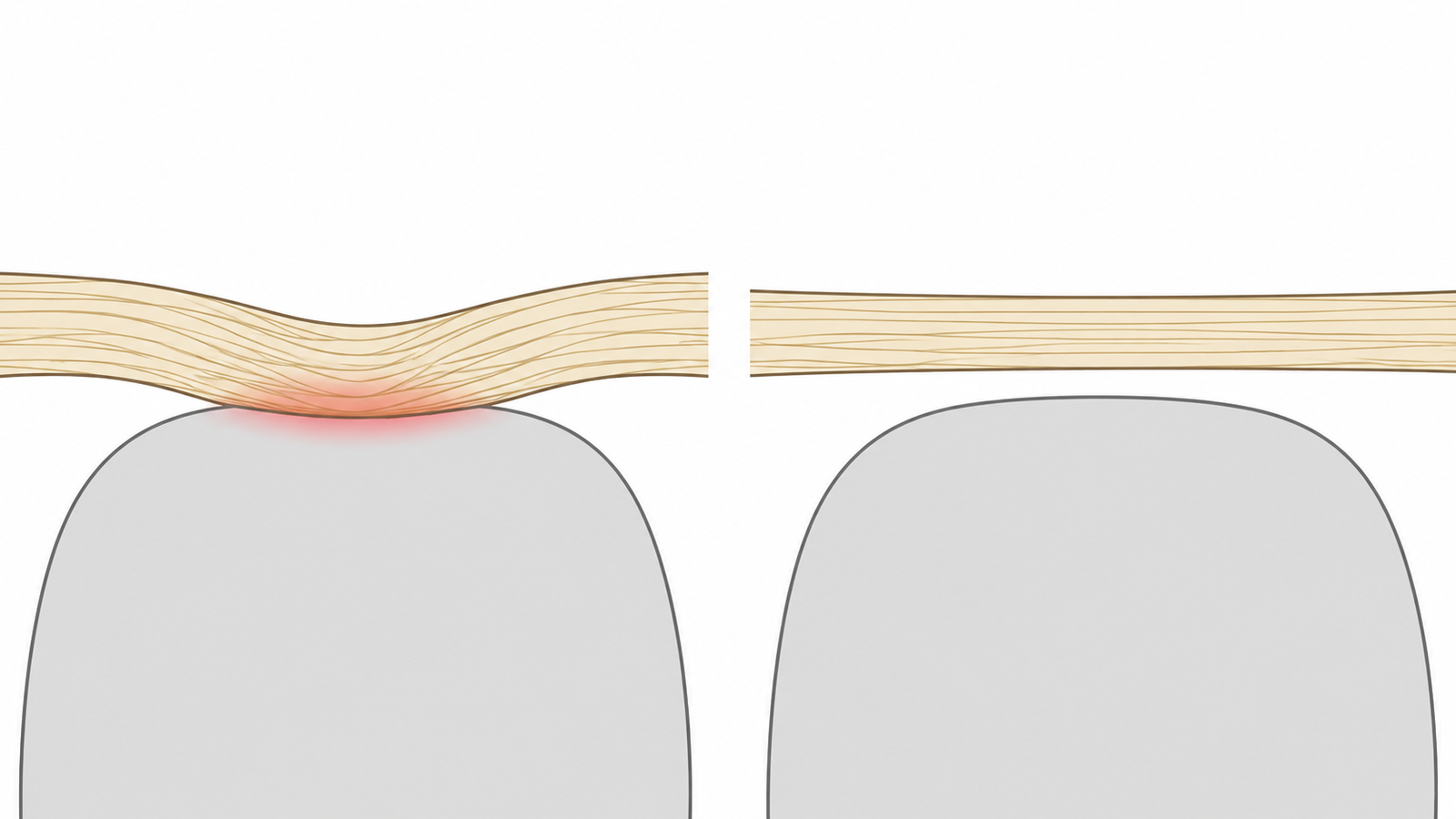
Same tendon, same hip. One of these irritates it and one of these rebuilds it.
That's the whole rule. And once I had it, everything made sense. Why the stairs. Why getting off the sofa is worse than the walk after it. And why some positions are completely fine and others aren't.
It was never random, and it was never me. It was an angle.
So here it is. The golden rule.
One. Learn which positions and movements are squashing it, so you stop doing it without knowing.
Two. Settle the tendon down, so working on it is actually bearable.
Three. Rebuild it with guided exercises, most days, until it holds again.
Three things. In that order.
Now Go And Look In Your Drawer
I'll tell you what was in mine, and what I now know each one was actually doing.
The massage gun
The foam roller
The stretches off YouTube
The heat pad
The cortisone shot
The red light face masks and panels
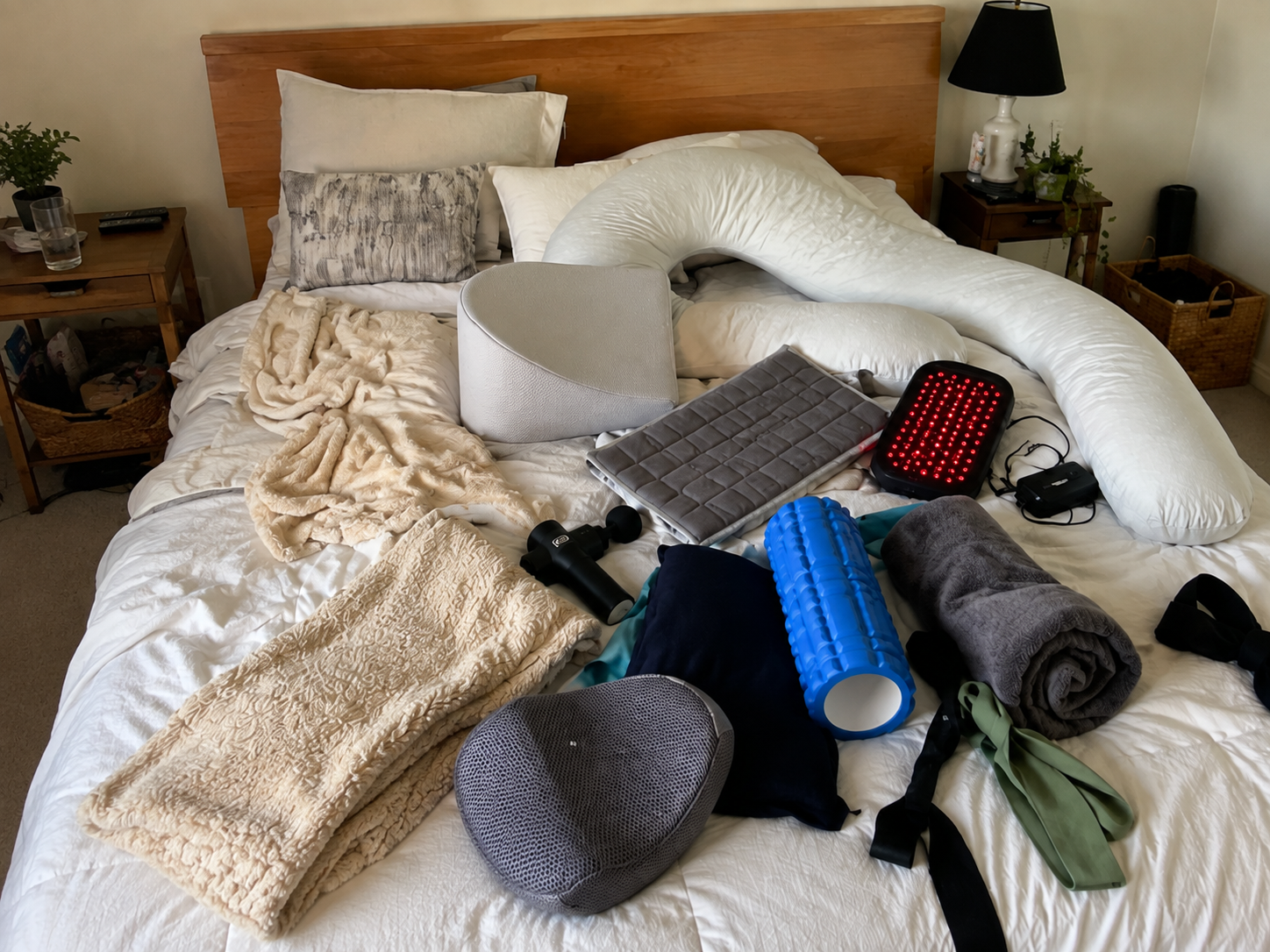
Now read that list as one thing instead of six.
Every single item either settles it or makes it worse. Not one of them rebuilds anything.
And I don't think anybody is hiding this from us. I used to. I was angry enough to believe it.
But the real reason is simpler and honestly more depressing. The settling half is the half you can put in a box and ship. It's a device. It arrives, it feels like something is happening, and you can sell it to a stranger on the internet.
The rebuilding half is somebody telling you how much to do today and stopping you when you're done, most days, for months. Nobody has worked out how to put that in a box, so almost nobody sells it, and everybody sells the half they can.
So the light companies talk about everything except loading. They're not exactly lying about what light does. They just never mention the two thirds of the job their box doesn't do.
And it works, because it feels like something. Which is why so many women buy four different things and still can't tell you which one helped, and end up blaming a busy week instead of admitting they wasted the money again. I did that twice.
And Then There Is The Thing I Did For Free That Made It Worse
This was the part I really didn't want to read.
Every time I stopped doing something because it hurt, that tendon got a little bit weaker.
Think about an arm that's been in a cast for six weeks. It comes out visibly thinner than the other one. Nobody's surprised by that. Nobody thinks the arm is damaged. It just stopped being asked to do anything.
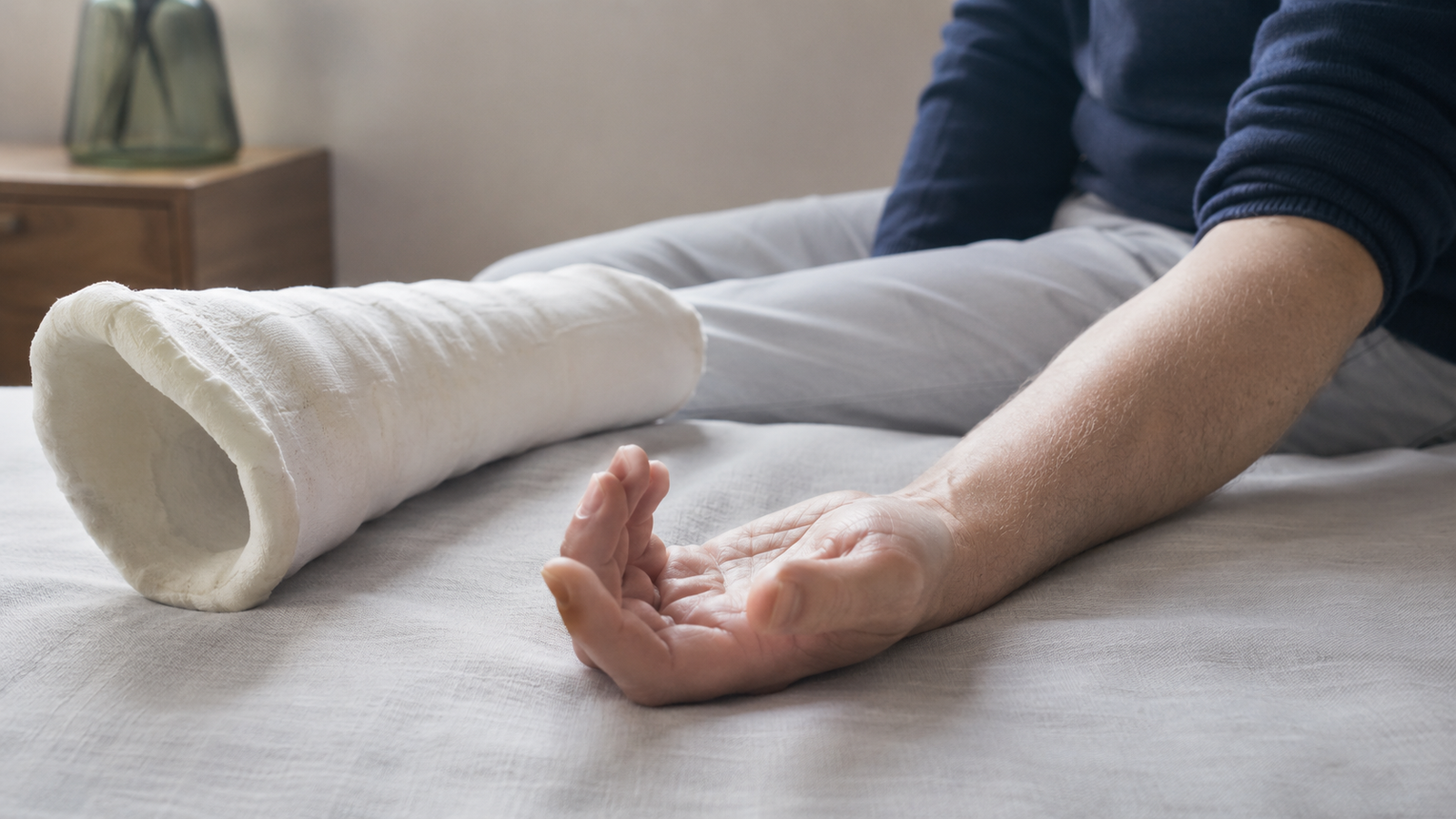
Tendon is living tissue and it does the same. It holds what you ask it to hold. Ask it for less and it gives you less.
And here's the cruel part. Resting doesn't stop the squashing. You can sit still all evening with your legs crossed and squash it the whole time.
What resting takes away is the working. Which was the only half building anything.
So every careful week counted against me. Then something completely ordinary would hurt more than it had a year before, and I'd think, well, this is just getting worse.
It wasn't getting worse. It was getting weaker. Those are two different problems and only one of them can be undone.
The One Place That Does All Three Is A Clinic
And that's where I found the number that made me properly angry.
The research I read used fourteen guided sessions in eight weeks. Fourteen, with somebody watching the load and changing it as the tendon changed. That's what produced the result everyone quotes.
I got six. Then my coverage ran out and the next block was more than we could justify, and I sat in the car outside that clinic doing the maths.
And even in those six, nobody had time for step one. You get the exercises, and then about ninety seconds on how to sit and how to sleep, while you're already putting your coat on.
So it wasn't that there was no solution. There was one. It just cost more than most women have, and even then you only got two thirds of it.
What Actually Rebuilds A Tendon
One thing does, and I'm sorry to tell you it's the boring one.
You load it. Carefully, in an amount somebody gives you, most days, and you increase it as it adapts.
Tendon cells respond to being worked. Give them the right amount and they lay down new collagen along the lines of force. The rope gets denser and better organized and starts holding again.
That takes weeks, not days. Which is where most people stop, usually about two weeks before anything would have shown up. I was one of them. Twice.
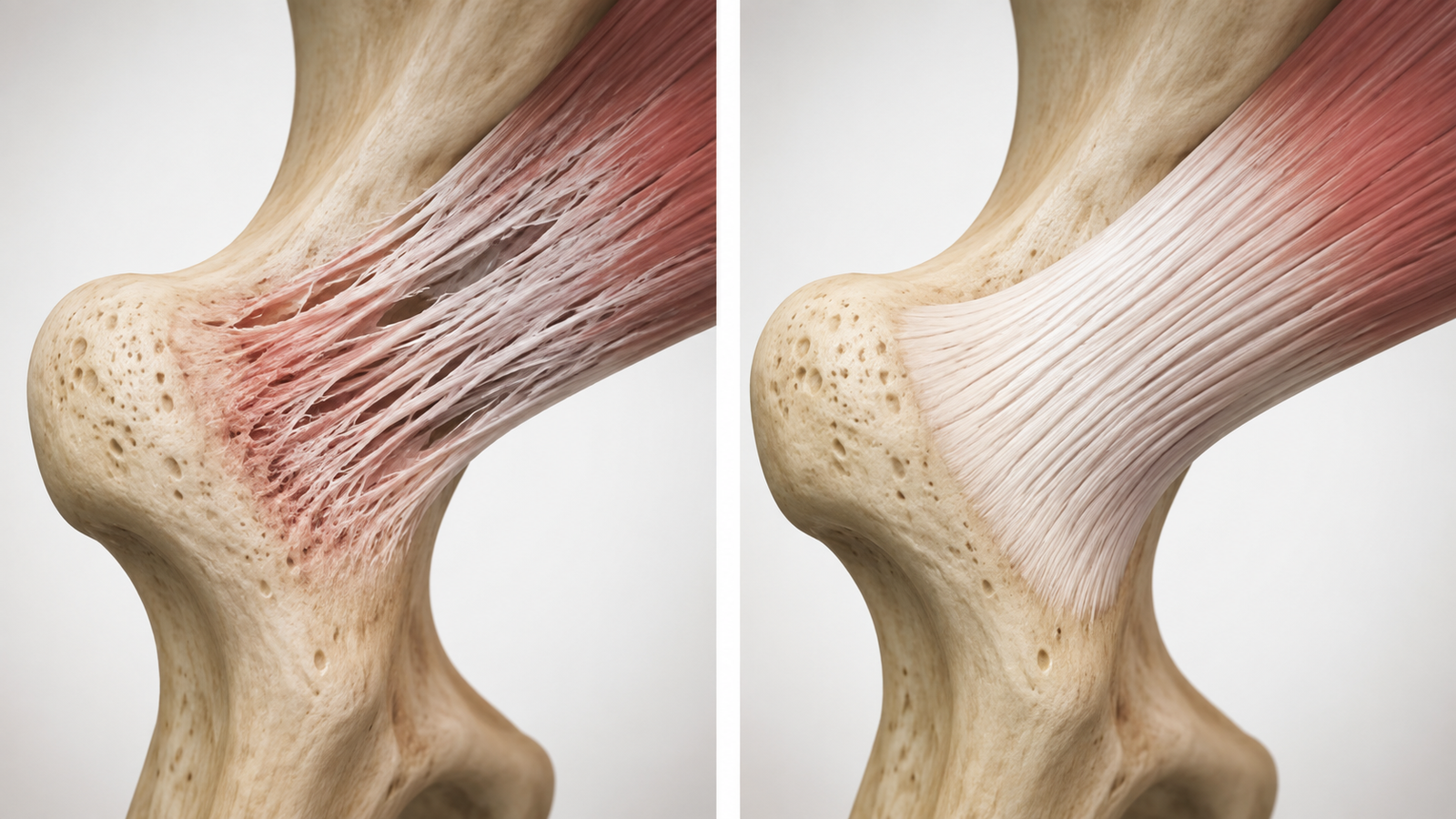
And the evidence for this is not thin, which is the part I needed after four years of being sold things.
In 2018 the BMJ published a trial of 204 people with this exact condition. A guided program against a cortisone injection, against just waiting and seeing. At eight weeks the guided group was doing substantially better than either. At a year they were still ahead on how they rated their own condition, although pain scores were similar across the groups by then.
Now look at what that winning group was actually called.
Education plus exercise.
Not exercise. The explaining was in there from the start. It's half the name of the thing that beat a steroid injection, and it's the half that vanishes the moment a program becomes a photocopied sheet.
That trial tested physiotherapy delivered by clinicians across fourteen sessions in eight weeks. It did not test any device, including the one described further down this page. What it established is the principle: guided, progressive loading is what rebuilds a worn tendon.
Which is exactly what I'd been missing. I'd had step two on its own, over and over, from different shops at different prices.
And I'd never once had step one or step three.
The treatment was never wrong. I just got nowhere near enough of it, and then I decided it had failed me.
What I Found
Once I understood what that paper was actually saying, I could finally filter through the nonsense. Everything I used to take seriously went out the window, and one thing was left standing.
It's a company called ARESS Wellness, and the thing they make is the Springline System. It was the only thing I could find that does all three parts, in the right order, in the same box.
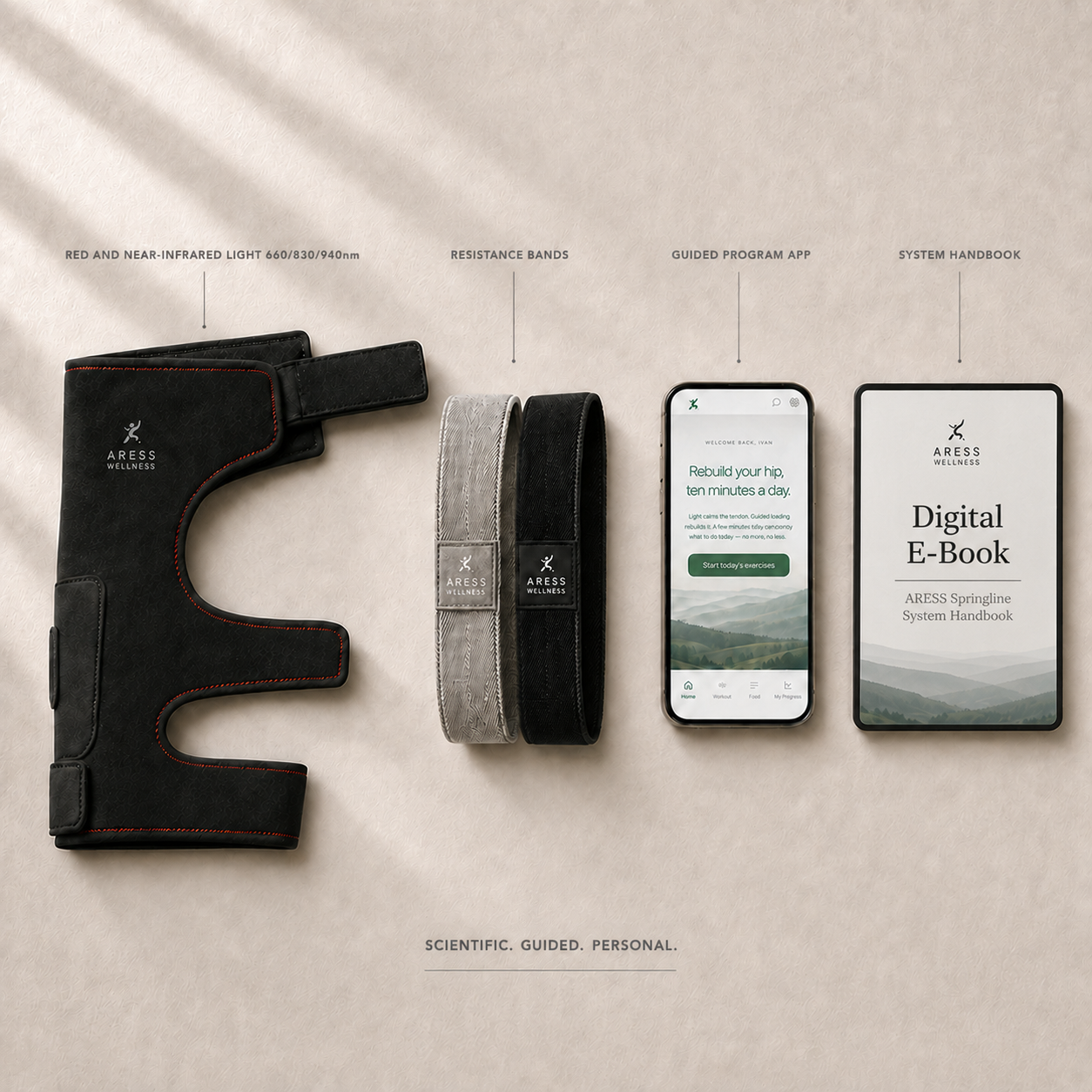
1The handbook, for step one
2The wrap, for step two
3Two bands and the app, for step three
4And the app decides for you
Why I Actually Bought It
And trust me, I am about as skeptical as it gets. I'd already bought everything under the sun and I wasn't looking to throw more money at this.
So before anything else I went and read what other women had written about it. Not the copy on the site, the reviews. And a lot of them weren't about hips at all. They were about the things that came back afterwards.
Then I found the thing that actually sold me, which wasn't a review at all.
There's a community of women inside the app. All ages, all doing the same program, all at different points in it. They post about how their week went, and when something isn't working, somebody further along answers.
I joined about a week in, mostly out of nosiness, and I've made real friends in there. That sounds ridiculous to write down at forty nine and I don't care.
After two years of thinking I was the only person this was happening to, that was the part that got me. Not the science. Just not being on my own with it.
I'll be straight about the start, because I nearly quit.
The first couple of weeks I was let down. I expected something to happen immediately and nothing did, and I came very close to putting it in the drawer with everything else.
What stopped me was a woman in there who told me she'd nearly done the same at exactly the same point, and to give it until week six.
By about week five or six my hip felt like butter.
If Any Of This Sounded Familiar
I'm never one to preach or guarantee anything, so I'm not going to sit here and tell you this will definitely work for you. I've never seen your hip and you shouldn't trust anybody who says otherwise.
What I will tell you is the thing I'd have paid anything to hear four years earlier. Settling a tendon and rebuilding a tendon are two completely different jobs. Almost everything sold for this only does the first one. That is why it always came back.
And there's a 90 day guarantee. Ninety, not thirty. If it does nothing for you, send it back and you get every cent. That's the only reason I was willing to risk it after everything else I'd wasted money on, and it's the only reason I'd suggest it to you.
90-day money-back guarantee · Handbook, wrap, both bands and the guided program included
I'll say the awkward bit, because it's why I started writing this and I'd be a coward to leave it out.
It came back.
Not overnight, and not like a switch. What happened first was that I stopped bracing. I didn't even notice it going. There was just a night where I wasn't running the calculation in my head first, working out which way I could lie and how long before I'd have to stop.
And then a while after that, Thomas made a joke about something. A stupid one. And I laughed, and he looked at me for a second like he hadn't seen me in a while.
Twenty three years. I'd turned us into flatmates and I'd have told you it was permanent.
It was never a marriage problem. It was a tendon on the outside of my hip, and nobody ever told me.
If you're sitting there thinking your husband has quietly given up on you, or worse, that you've quietly given up on yourself, just consider that you might have been solving the wrong problem this whole time.
I did. For four years.
One customer's account of her own experience. Individual experiences vary. ARESS Springline guides general conditioning for hip comfort and mobility. It does not diagnose or treat any condition and is not a substitute for advice from a qualified clinician who has assessed you. If you have pain radiating below the knee, numbness or pins and needles, pain that began after a fall, or hip surgery in the last six months, speak to a clinician before starting any loading program.