
90% Of Menopausal Women Go Through Uncontrollable Weight Gain
And The Worst Part Is...
Most Women Don't Even Understand Why...
So what's actually going on?
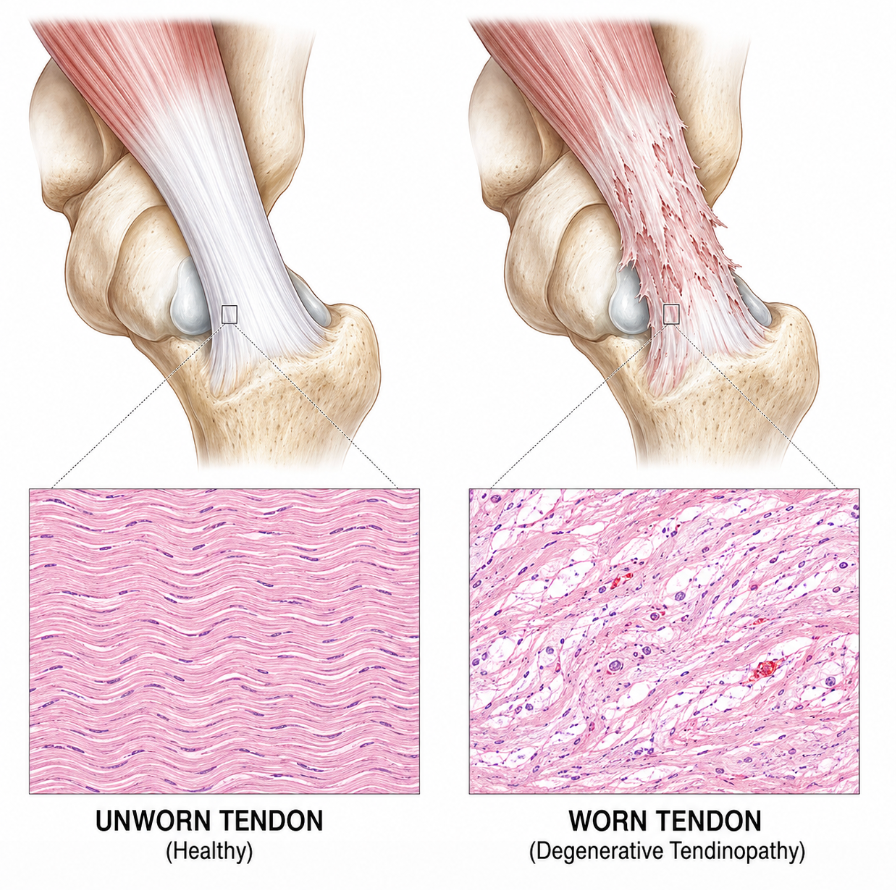
What menopause does to a tendon
First, your estrogen levels take a nose dive. The problem is estrogen plays a crucial part in how your body produces collagen. And collagen is the only thing holding your tendons together.
As collagen drops through menopause, your tendons become less resilient to work they used to absorb without complaint. That's why you can't go for a 20 minute drive anymore, or can't do your regular chores without flaring up.
The gluteal tendons on the outside of your hip are the first to go because they're your body's main support. They carry you every time you stand on one leg. Every step. Every stair. Every time you get out of a chair.
So of course you become less active, just existing hurts!
BUT YOU WEREN'T READY TO GIVE UP
So You Tried Everything To Lose That Weight But Nothing Worked...
So you went looking for exercises. You found 40 videos on YouTube, all promising your hip pain will disappear in a couple weeks. But you had no idea which applied to you. Some helped. Some made the pain far worse.
You pushed through each session anyway because that's what you're meant to do and your hip flared up, bad. So you took a break for two weeks then started again from scratch.
You did that four or five times before you quietly quit.
You even tried buying a red light wrap. It made things feel better for a bit, but nothing helped once you took it off.
Here's the thing though
Nothing you tried failed. You were only ever doing one part of it.
The wrap wasn't wrong. It calms an irritated tendon, which is exactly what it's for. It was just never going to rebuild anything.
The exercises weren't wrong either. Loading is the only thing that strengthens your tendon. But the exercises need to be personalised to you, because load without the right dose is how you flare up.
And underneath both of them, you were undoing the work every night without knowing it. How you sleep, how you stand at the sink, which stretches you were told to do.
Three parts. And they have to come together perfectly to work. We know... this is all a bit overwhelming. But complex problems require complex solutions. Anyone else is selling you a fairytale.
To Make Any Progress, You Need These Three Things
Know what to avoid
Before anything else. If you're compressing your tendon eight hours a night, no amount of good work in the morning can save it.
Calm it enough to get through a workout
An angry tendon won't tolerate loading. Twenty minutes of light before a session is what makes the session possible.
Rebuild it with targeted exercise
Graded, progressive, and dosed against how your hip actually responded yesterday. This is the part that lasts.
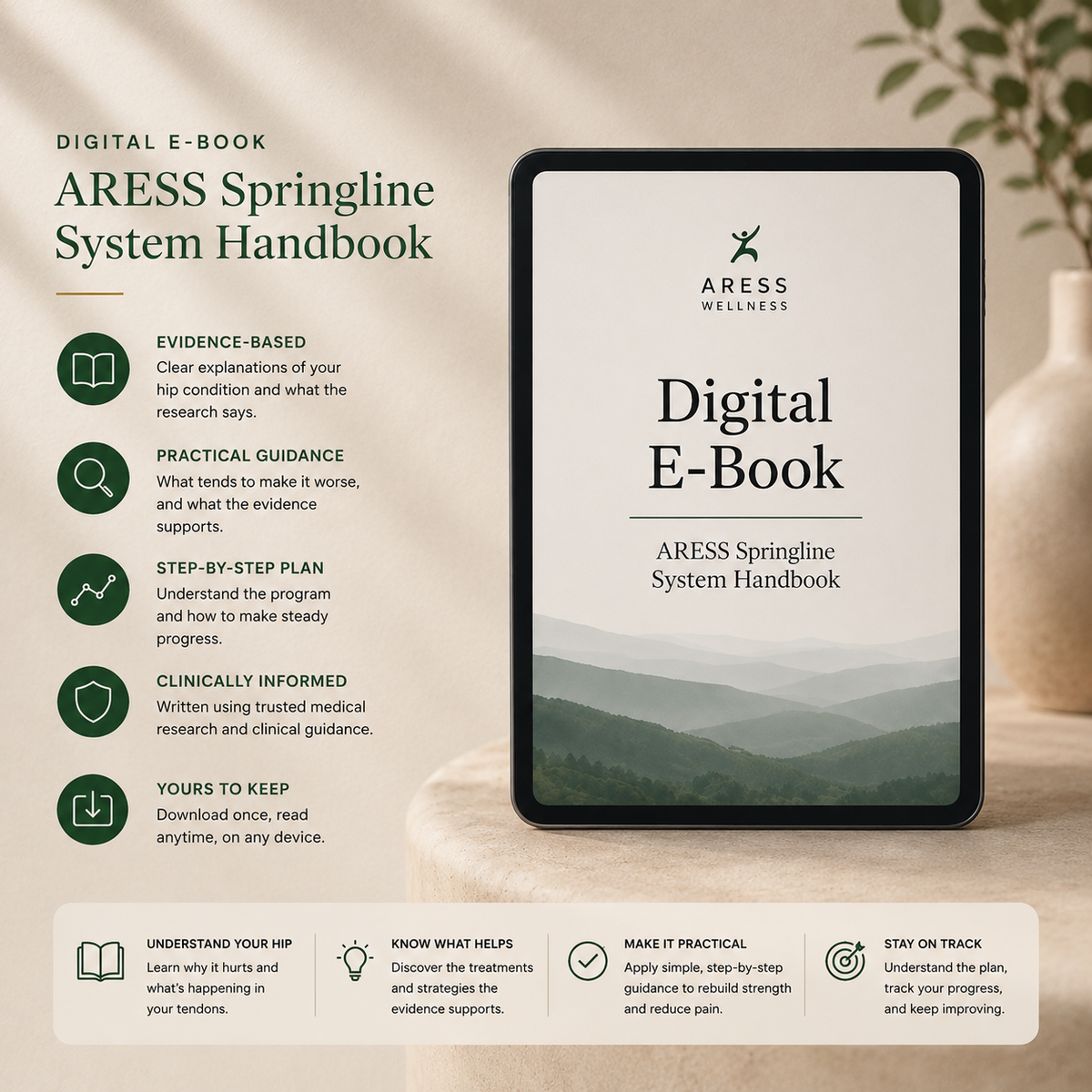
The handbook
The twenty minutes is easy. It's the other 23 hours.
You can do everything right in your session and undo it before lunch.
Sleeping with your top leg falling across your body compresses the tendon for eight hours. Standing with your weight parked on one hip does the same thing upright. Half the stretches you've been given pull the knee across the midline, which is the exact position that irritates it.
It arrives by email the moment you order, so you can read it before the box turns up.
- The positions that irritate it and the simple swaps for each
- Which stretches to stop and what to do instead
- What to do on a bad morning when it's already sore
- When to see a clinician the signs that mean get it looked at
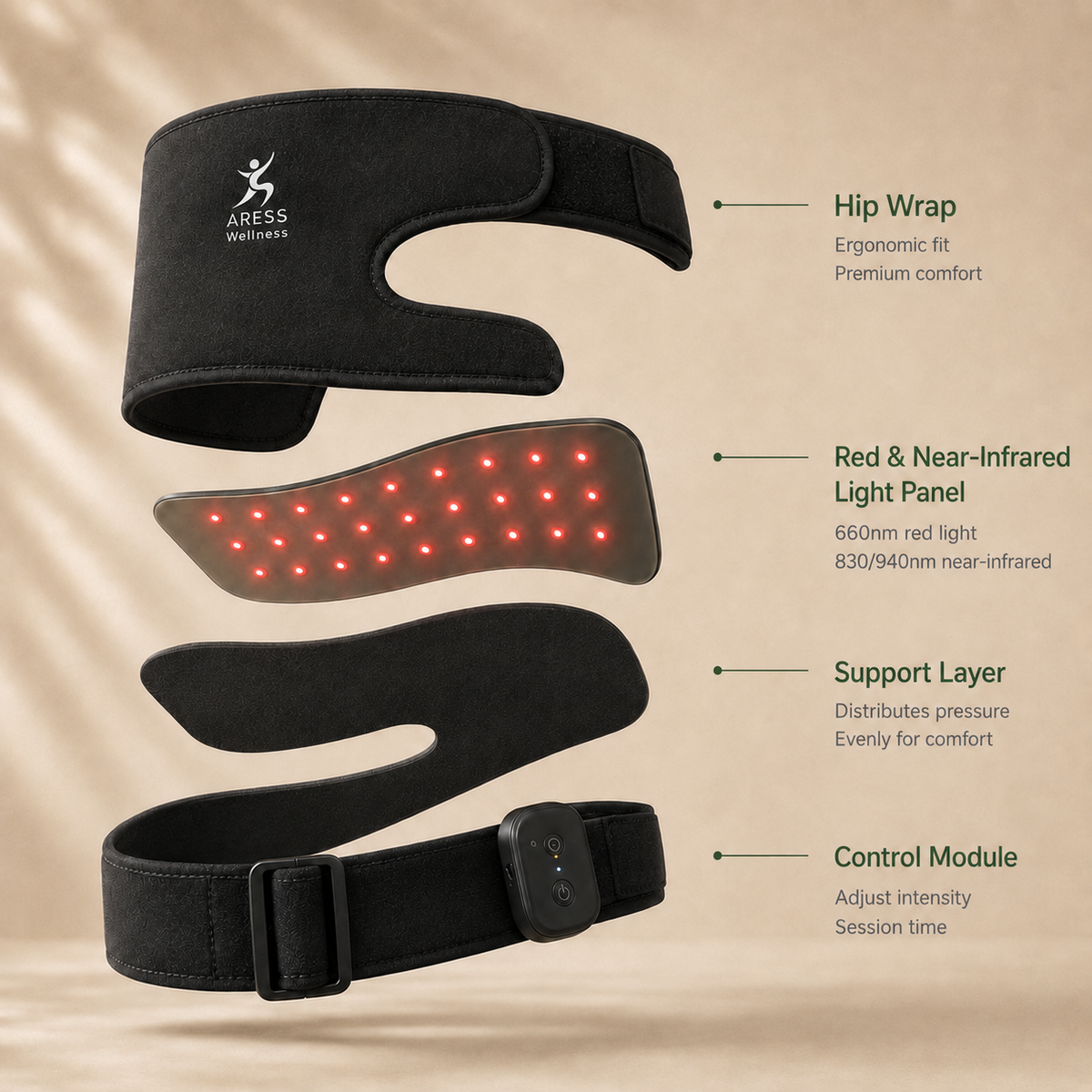
The wrap
So your hip doesn't flare mid-exercise
An angry tendon won't tolerate the work, so you push through, flare, and stop for a fortnight. Then you start from nothing.
The wrap breaks that loop. Twenty minutes of red and near-infrared light before your session calms the tendon enough that you can get through the work and come back tomorrow.
The light settles the tendon. The loading is what rebuilds it. A wrap on its own is why so many people feel better for a day and no better in a month.
- Red and near-infrared LEDs sized to wrap the outer hip
- Cordless in use walk around, make dinner, wear it while you work
- Twenty minutes before your session, once a day
- Rechargeable charges by cable, lasts about a week
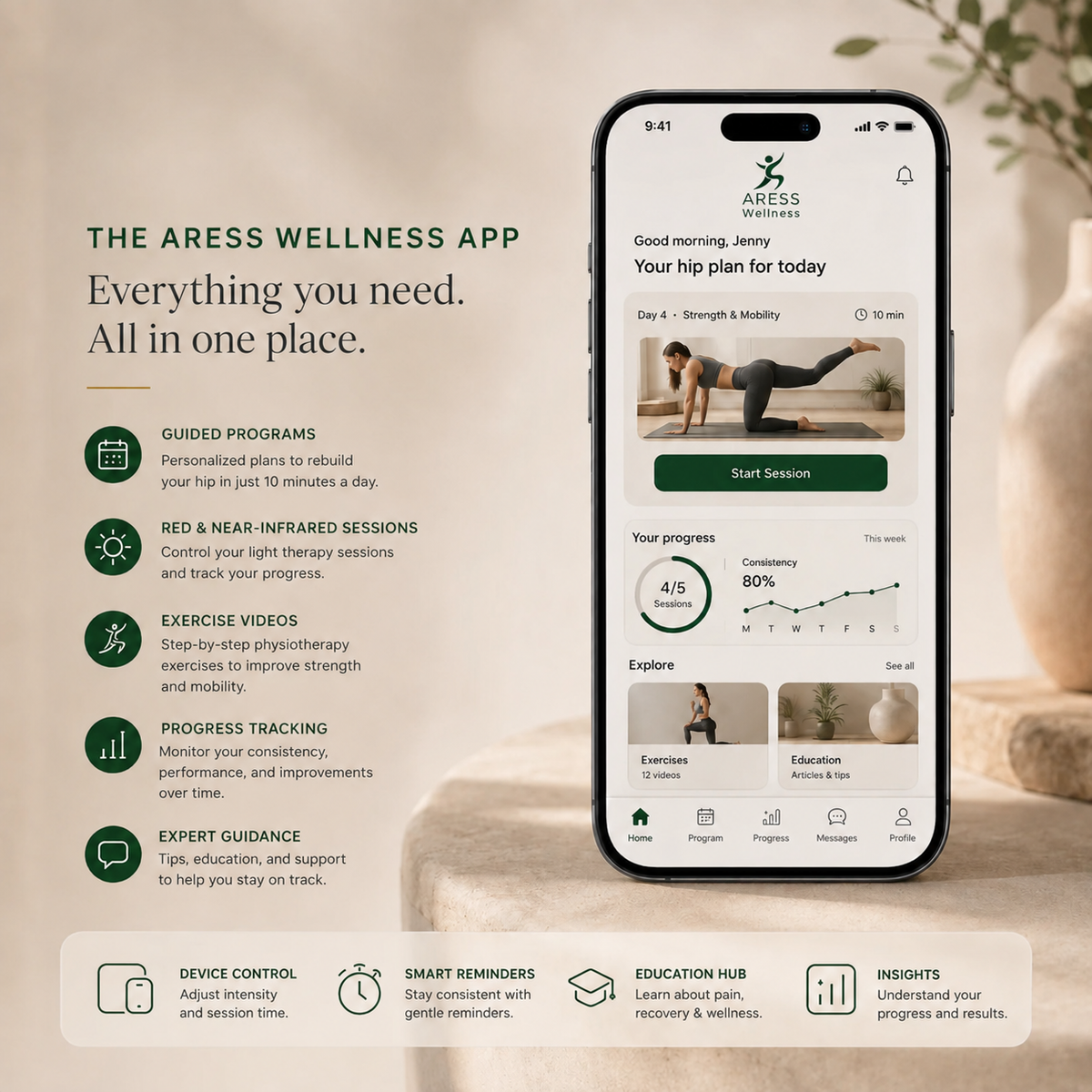
The app
It decides the dose so you don't have to
A tendon doesn't tell you how it felt about a session while you're doing it. It answers about 24 hours later. So the only way to dose it correctly is to check in the next morning and compare.
That's what the app does. You score your hip out of ten when you wake up. It reads that against yesterday and builds today's session from it. Same or better, it progresses you. Worse, it pulls back automatically.
You never work out whether you overdid it. You open it and follow along.
- Morning check-in takes about thirty seconds
- Adaptive dosing today's session is set by this morning's score
- Video for every movement with sets, pace, and where to stop
- Three progressive phases across the full three months
- Progress tracking see the trend you can't feel day to day
- No subscription included with the system, one payment
In their words
Women who got moving again
Patricia

Carol
Diane
Joanne
Linda
Barbara
Nancy
Margaret
Susan